Benefits
Square-Edged Grooves and the Dairyland Initiative Standard — Why Details Matter
By Rick Jr. · June 18, 2025
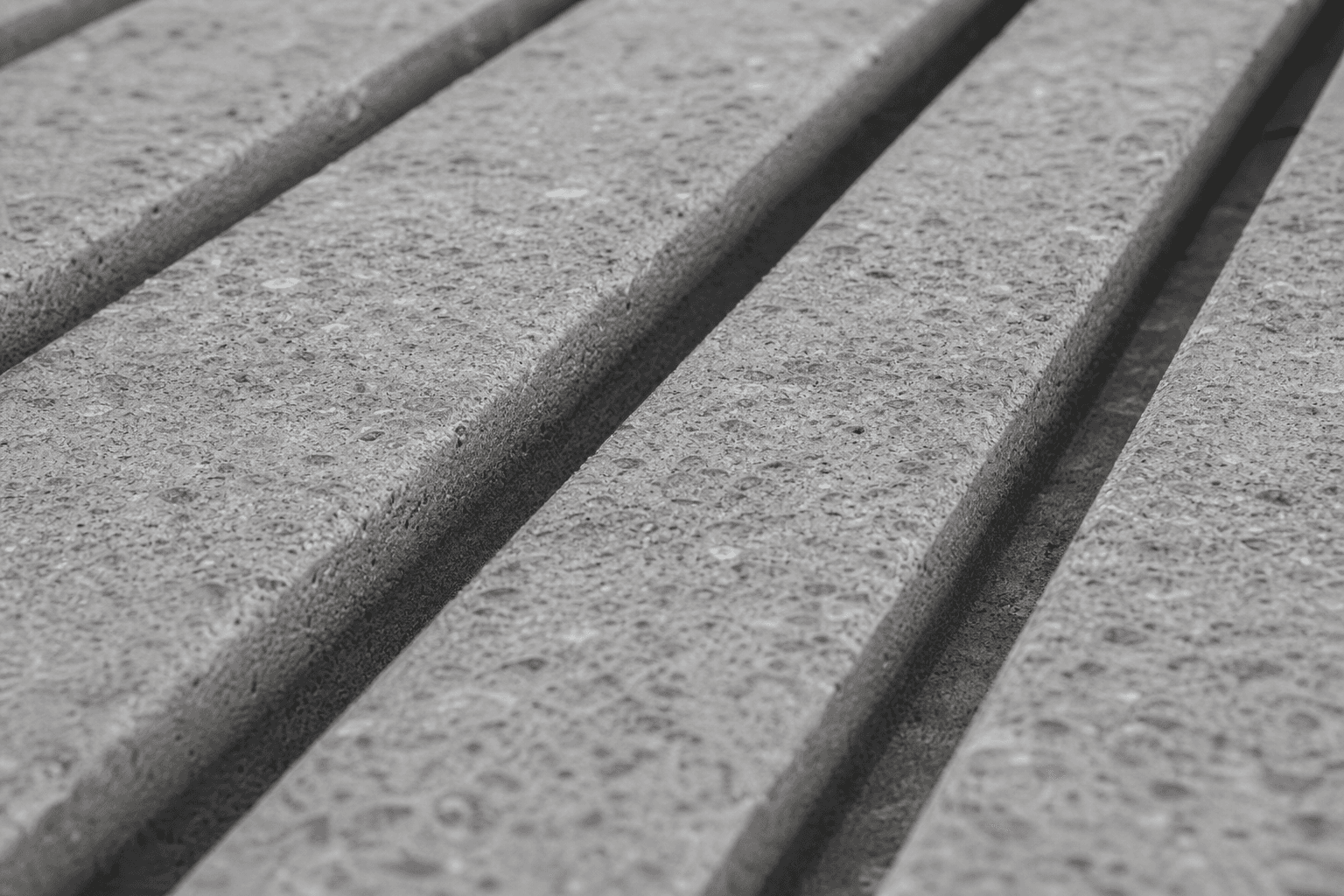
Close-up of square-edged concrete grooving cut to Dairyland Initiative spacing standard for dairy cattle traction
Not all grooves are created equal. The Dairyland Initiative defined spacing and square-edge profiles for a reason — and cutting corners on either one costs hooves and traction.
What the Standard Actually Says
The Dairyland Initiative — a partnership between Michigan State University and UW–Madison — didn't invent grooving. They measured it. Decades of research on dairy cow locomotion, hoof load, and barn flooring produced spacing and profile recommendations that balance traction against hoof abrasion. Square edges. Specific groove width and depth. Spacing matched to the application.
That standard exists because bad grooving hurt cows. Early cuts with rounded profiles or spacing too tight trapped manure and abraded hooves faster than smooth concrete. The industry needed a benchmark. Dairyland became it, and professional grooving crews worth hiring cut to it.
We reference Dairyland on every job because it's the spec that protects your herd. Read the overview on why grooving works, then look at our comparison with milling to see why profile shape matters as much as surface texture.
Square edges. Specific depth. Spacing matched to the application. That's the standard.
Why Square Edges Beat Rounded Cuts
A square edge gives the hoof claw a positive mechanical stop — the edge catches the keratin without requiring the hoof to slide and grind for friction. A rounded edge, whether from a dull blade, worn groove, or wrong equipment, forces the hoof to slide farther before catching. That sliding is what abrades soles and starts lesions.
After 35+ years of grooving, I can tell a rounded cut from a square one with my boot before the cows walk on it. Rounded grooves feel slick within a year. Square-edged grooves hold traction through the full 6–8 year regroove cycle when the barn is maintained.
Some contractors push milling or rotary cutting because it's faster. Faster isn't better if the profile is wrong. The Dairyland standard specifies diamond-blade cuts that leave clean 90-degree edges. That's what our EDCO saws deliver on every pass.
Spacing, Depth, and Pattern Selection
Spacing too close packs manure in the grooves and creates a maintenance nightmare. Spacing too wide leaves smooth islands where hooves slide. Depth too shallow wears out in three years. Depth too deep creates structural stress in the slab. The standard exists in the middle ground that field data supports.
Pattern selection follows traffic. Straight-line grooves for long alleys. Diamond patterns at turns and waterers where cows pivot. Herringbone on ramps where grade and direction change together. Our patterns page maps each cut to the barn zone it serves.
Cutting the same pattern everywhere is a tell that the operator doesn't know dairy traffic. Match the pattern to the zone, cut to Dairyland spacing, and leave square edges. That's proper grooving.
What Happens When the Standard Is Ignored
Farms that got burned by bad grooving sometimes blame grooving itself. That's like blaming tires after buying the wrong size. Rounded edges, random spacing, and shallow passes create the worst of both worlds — enough abrasion to irritate hooves, not enough grip to prevent slips.
Those farms often call us for regrooving within three or four years. We recut to proper depth and square the edges. Lameness drops. The farmer wishes they'd found us the first time. At roughly $0.75/sq ft, paying once for proper work beats paying twice for shortcuts.
Lameness still costs about $4.50/day per cow, with cases running $76–$533 and 700–900 lbs of milk lost. Cheap cuts don't save money — they delay proper protection.
Audit your contractor's references on dairy — not feedlots, not warehouses. Hoof load on a dairy cow repeating parlor trips is different from beef on pasture or equipment traffic in a warehouse. Dairyland Initiative spacing was written for dairy locomotion. Crews that cut dairy barns every week know the difference in their blade settings.
How We Cut to Spec on Every Job
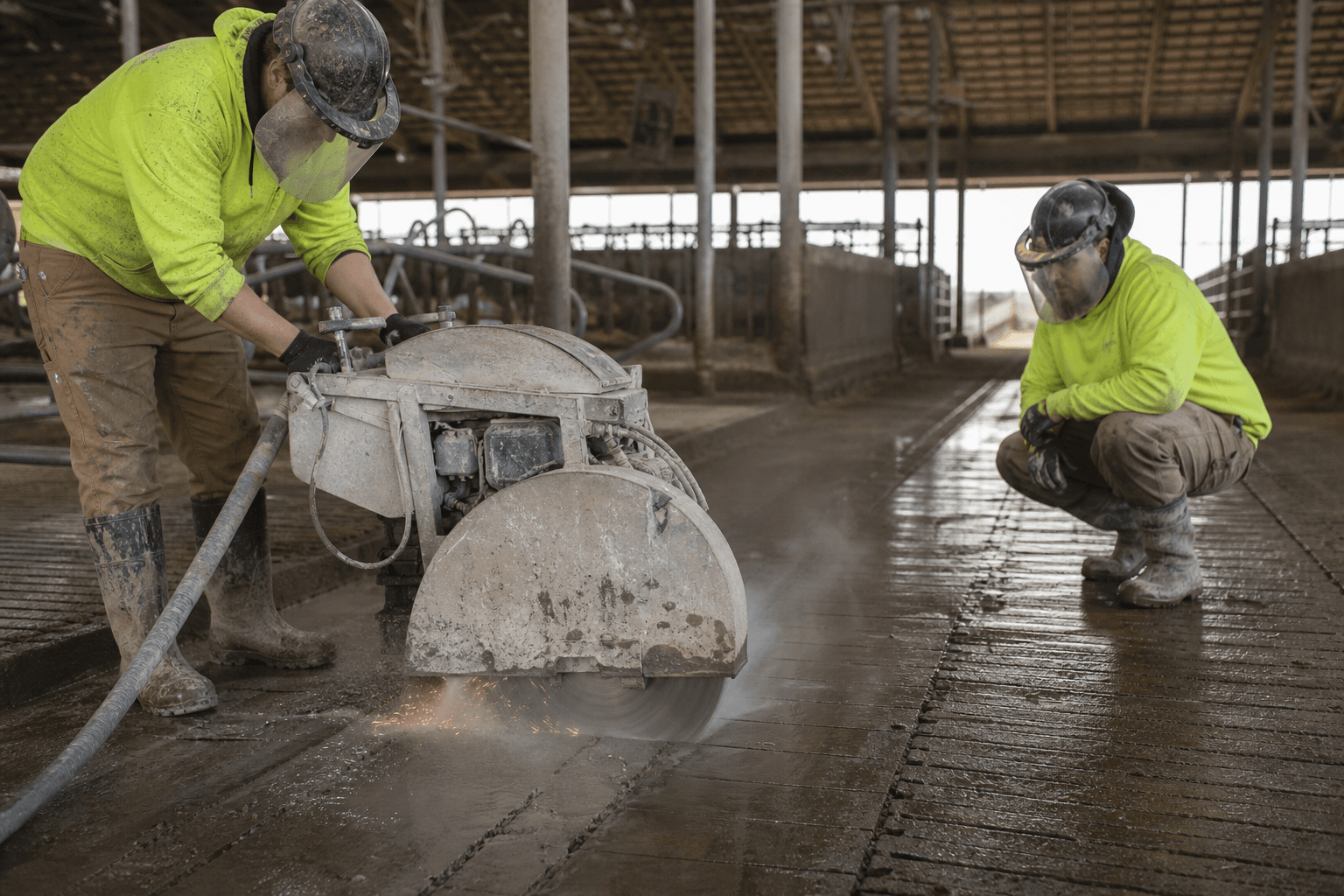
Davidson Cement Grooving runs diamond-blade saws with guides set to Dairyland spacing for each application. We don't freehand alleys or guess at depth. Father-and-son crew — the same people who've been cutting barns since the 1980s, with 35+ years of combined field experience on dairy, beef, and goat facilities.
Before we cut, we walk the barn and plan zone-by-zone. Holding areas, returns, alleys, free stalls, ramps — each gets the pattern and spacing it needs. See our full service list for what's included.
Request a free estimate. We'll tell you if your existing grooves can be regrooved to spec or if sections need a fresh pass. Honest assessment, fair price, square edges.
Pay once for proper work. Square edges last the full 6–8 year cycle.
The Standard Protects Your Investment
Grooving at $0.75/sq ft is a capital investment in your barn. Cutting to Dairyland spec protects that investment for the full regroove cycle. Cutting off-spec wastes the money and the cows that slip while you wait to fix it.
Keep your herd on all fours by holding the line on edge profile and spacing. That's not being picky — it's following the research that the dairy industry already paid for.
Third-party audits — whether for your co-op, organic certifier, or your own internal welfare checklist — increasingly ask about lameness prevention. Documented grooving at research-backed spacing is a defensible answer. Smooth concrete with rising trimmer visits is not.
Questions about your current grooves? Send photos or schedule a walk-through. We'll tell you straight whether your floor meets spec or needs attention. Davidson Cement Grooving — square-edged, research-backed, nationwide.
Verifying Your Current Floor Against Spec
Before you hire anyone — including us — walk your barn with a critical eye. Photograph groove edges up close. Measure spacing if you can. Compare what you see to the Dairyland Initiative guidance on our why grooving page. Rounded edges and irregular spacing mean you're not getting the standard even if grooves are visible.
If a previous contractor cut too shallow, regrooving may need to go deeper than a simple touch-up. If spacing is wrong, partial correction might require a new pattern in problem zones. We'd rather tell you that upfront than promise a recut that can't fix the underlying profile.
Square-edged grooves from an experienced crew last the full 6–8 year cycle and protect hooves while they grip. That's the spec. Anything less is a compromise your cows pay for at $4.50 per day per lame animal — and you pay for in milk lost and trimmer bills.
Equipment matters as much as intent. Diamond-blade saws on proper guides produce the profile. Grinding drums and milling heads produce something else — sometimes acceptable on a barnyard, rarely the right answer for a freestall alley where hoof load repeats hundreds of times daily. Ask what blade cuts your floor before you hire.
When we train the next generation on our crew, the first lesson is edge quality — not speed, not square footage per hour. A slower pass with a square edge beats a fast pass that rounds off. Dairyland Initiative standards exist because shortcuts showed up in hoof trimmer data. We cut to the standard because the data was right.
Spec isn't paperwork — it's the difference between grooves that last eight years and grooves that fail cows in three.
When in doubt, photograph your groove edges and send them. We'll tell you if they're square or rounded before you spend a dollar.
Edge profile is the whole game. Spacing and depth matter, but a rounded edge on a correctly spaced groove still fails cows on wet mornings. Look at the edge, not just the pattern.
We carry spare blades to every job because a dull blade rounds edges before the operator notices. Square edges require sharp equipment and experienced hands — both are non-negotiable on a dairy barn floor.
The Dairyland Initiative standard isn't marketing language — it's the profile that keeps hooves healthy and cows gripping when the alley is wet at 5 a.m.
Frequently Asked Questions
What is the Dairyland Initiative grooving standard?
It's a research-backed specification for groove width, depth, spacing, and square edge profile developed through Michigan State University and UW–Madison dairy research. It balances traction with hoof health for dairy cattle on concrete.
Can worn grooves be regrooved to meet the standard?
In most cases, yes. Regrooving recuts to proper depth and restores square edges on existing grooves. If concrete is severely deteriorated or previous cuts were too deep, we'll recommend section-by-section options during evaluation.
Why not use milling instead of grooving to the Dairyland standard?
Milling produces a different surface profile — textured but not square-edged. Wear patterns, hoof abrasion, and long-term traction differ. For dairy barn floors, square-edged grooving at Dairyland spacing remains the proven industry standard.