Importance
Regrooving Before Lameness Spikes — Timing Your 6–8 Year Cycle
By Rick Jr. · September 9, 2025
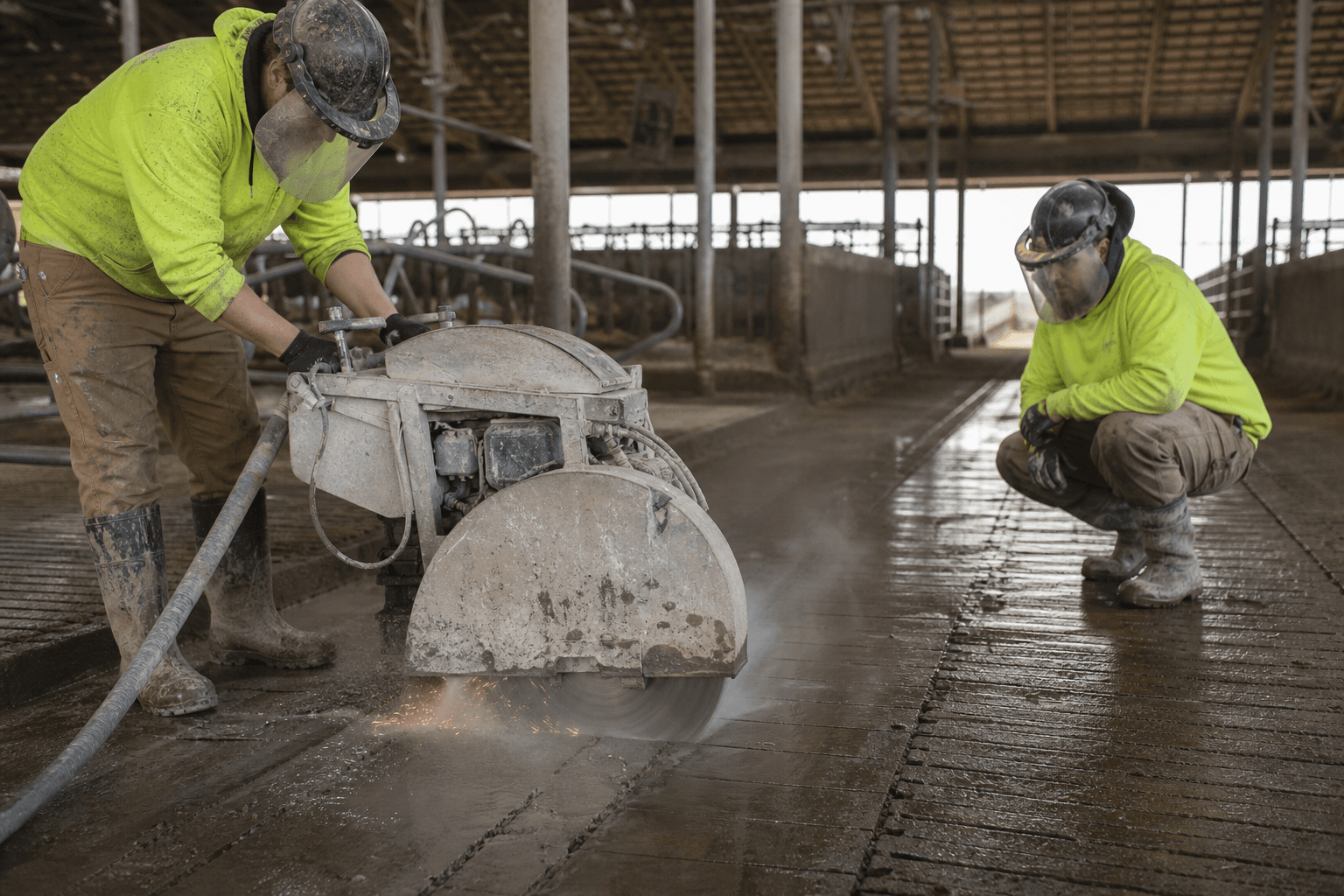
Before and after regrooving worn dairy barn floor restoring square-edged traction grooves
Grooves wear smooth on a predictable cycle. Regrooving before edges fail keeps traction active and lameness flat — instead of spiking right when you thought the floor was fine.
The Cycle Nobody Marks on the Calendar
Grooving isn't forever. Manure, sand, cow traffic, and scrubbing wear groove edges round over 6–8 years. The floor still looks grooved from the office. Cows know otherwise — hesitation at the return, scrambling in the holding area, lameness creeping up a point per year until someone asks what changed.
Nothing changed except the edges. That's the regroove cycle, and farms that miss it pay in lame cows. Lameness costs about $4.50 per day per cow, with cases at $76–$533 and 700–900 lbs of milk lost. Lameness ranks as the #3 cost on a dairy farm. Regrooving on schedule is cheaper than every one of those numbers.
If your barn was cut in 2017 or earlier, you're in the window now. Don't wait for the spike — schedule regrooving before cows tell you through the trim chute.
Mark the year on the barn office whiteboard when grooving finishes. Circle year six for evaluation and year eight for outer limit. Visible dates beat memory when you're managing everything else on the farm simultaneously.
The floor still looks grooved from the office. Cows know otherwise.
How to Know Edges Are Failing
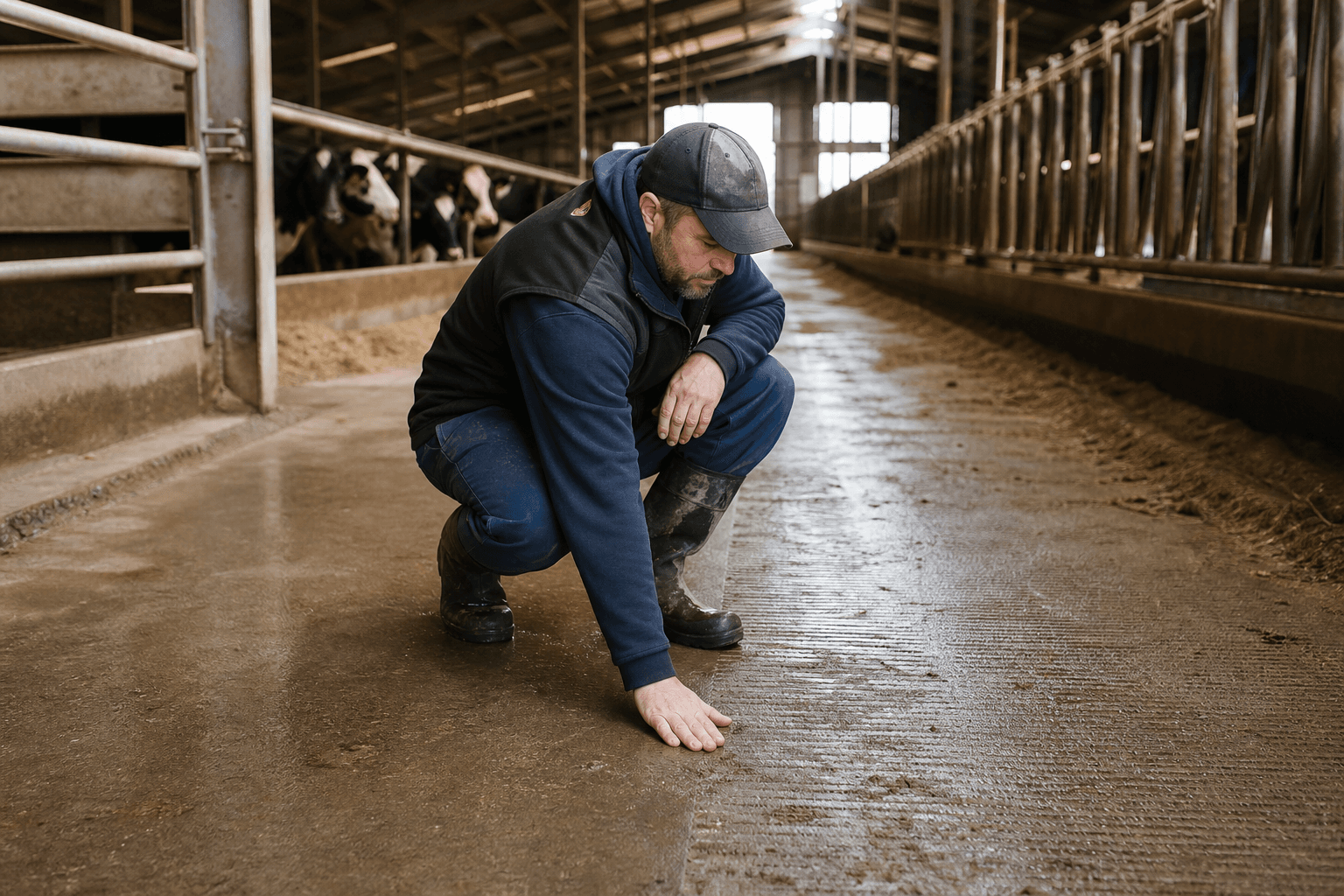
Visual inspection from standing height lies. Get on your hands and knees — or run a boot toe across the groove edge. Sharp means grip. Rounded means you're running on borrowed time.
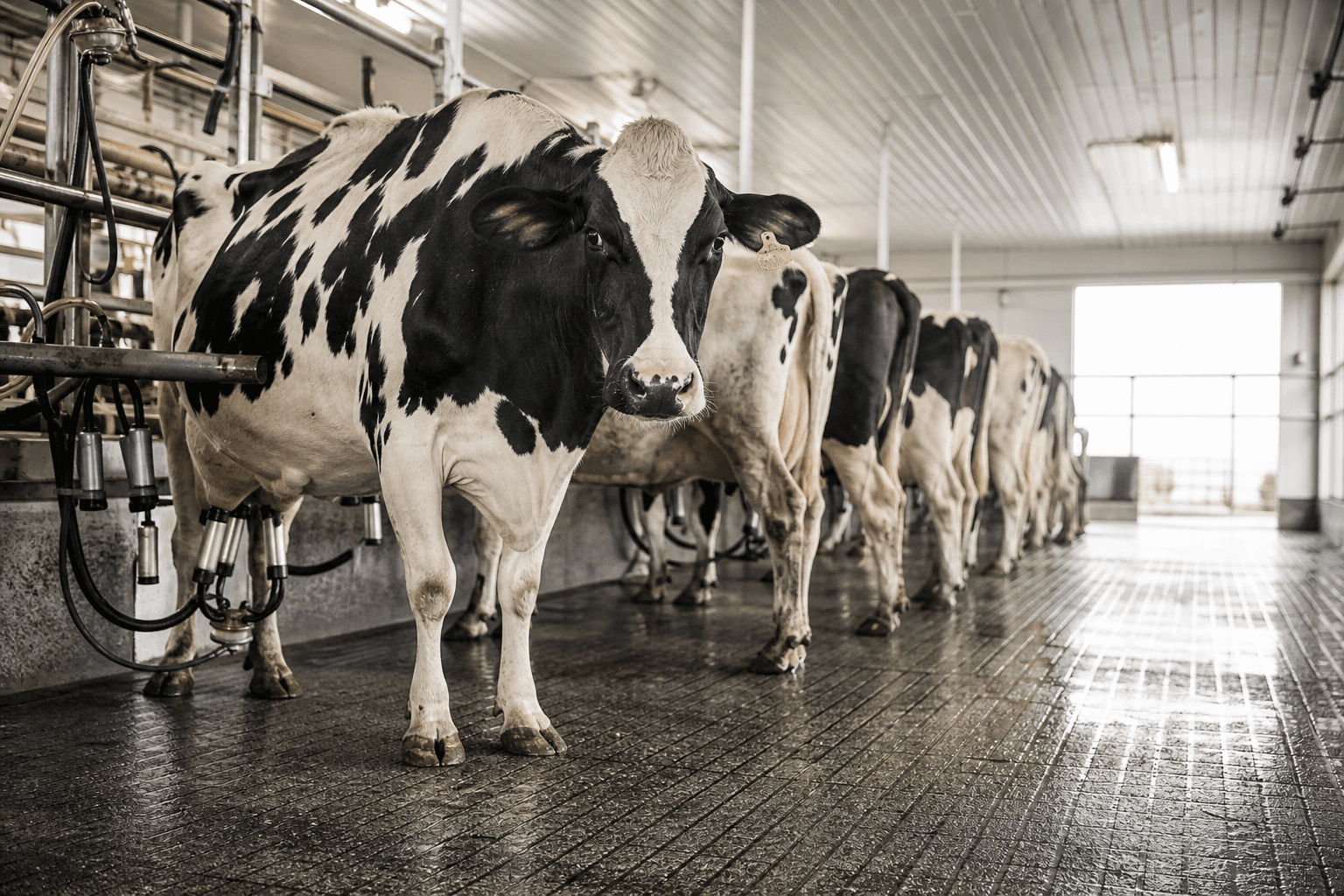
Cow behavior tells the truth faster than your eyes. Hesitation at turns, wide stances in the holding area, cows that won't walk on wet alleys — those are edge-failure signals. Cross-check with trimmer records: new sole ulcers and white line cases clustering in the same lactation mean the floor failed first.
High-traffic zones wear fastest: holding areas, parlor returns, waterers. Our guide on where slips start helps prioritize if you're phasing a regroove job.
What Regrooving Actually Does
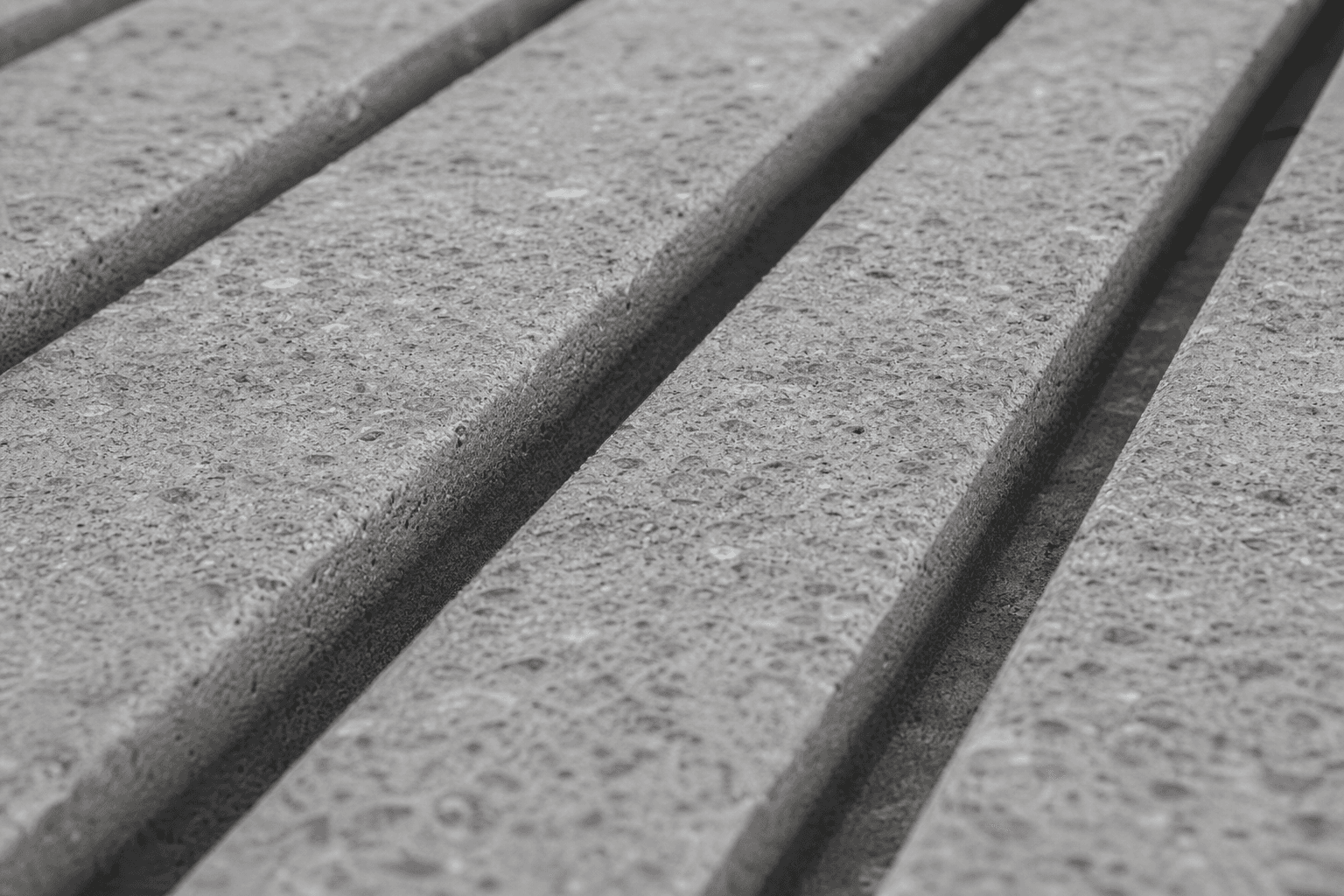
Regrooving recuts existing grooves to restore square edges and proper depth without replacing the concrete slab. Diamond-blade saws follow the old pattern, sharpen the profile, and reset the 6–8 year clock. One day of work, back in milking by evening on most barns.
Cost runs roughly $0.75/sq ft — similar to initial grooving, sometimes less if the pattern is already established. Compare that to new concrete or a year of elevated lameness and the choice is straightforward.
Regrooving to Dairyland Initiative spec — square edges, correct spacing — is what separates restoration from cosmetic touch-up. Read why grooving works and our piece on square-edged grooves and the Dairyland standard.
Manure acid and cleaning chemicals accelerate edge wear in some barns. If you use aggressive wash protocols, plan toward the six-year end of the 6–8 year window rather than eight. The cycle isn't arbitrary — it's how fast your specific management wears square edges into rounded ones that fail cows.
Timing: Before the Spike, Not After
Farms that regroove proactively keep lameness curves flat. Farms that wait see a hockey stick — years of okay numbers, then a jump that coincides with worn returns and holding areas. By then you've already lost cows and milk to edges that rounded off gradually.
Schedule regrooving in a dry window if possible — fall and spring are popular — but don't delay six months because of weather if cows are scrambling daily. Wet seasons expose worn edges fastest. Winter planning for spring cuts beats summer lameness.
We remind customers on the cycle when we can. Floors wear smooth every 6–8 years — we'll remind you before your cows do. Request a free estimate to slot your barn into the schedule.
Regrooving vs. Starting Over
Full floor replacement is rarely necessary for worn grooves. Regrooving restores traction on sound concrete at a fraction of replacement cost. Only slabs with structural damage — major cracks, settling, broken panels — need more than a recut.
Some farms combine regrooving with zone expansion: restore worn alleys and add cuts to holding areas that were never grooved originally. Our regrooving and restoration service covers both.
Avoid milling as a regroove substitute on dairy barns. Profile and wear differ from square-edged cuts. See grooving vs milling before choosing a shortcut that resets the clock without resetting the protection.
Regroove proactively and lameness curves stay flat. Wait, and you get a hockey stick.
Keep the Cycle, Keep the Herd on All Fours
Thirty-five years of grooving taught us one thing: timing matters as much as technique. Square-edged cuts at proper spacing protect cows for 6–8 years. Letting edges die on year seven without a plan gives you year eight lameness you could have prevented for about $0.75/sq ft.
Keep your herd on all fours by marking the regroove cycle on the same calendar as hoof trimming and stall maintenance. It's the same herd health program — different tool.
Davidson Cement Grooving — regrooving, restoration, and new cuts nationwide. Fair pricing, experienced crew, Dairyland spacing on every pass. Call for a free estimate and let's get your edges square before the spike hits.
Building a Regroove Schedule That Sticks
Write down the year your barn was last grooved — every zone, not just the alleys. Add six years. That's your evaluation date. Add eight years. That's your outer limit. Put both on the same calendar you use for vaccinations and stall maintenance so regrooving doesn't slip when cash flow gets tight.
If you expanded the barn since the last cut, new concrete needs initial grooving on its own timeline while existing zones follow the regroove cycle. Mixing old and new without a plan leaves gaps — usually at the transition between old alleys and new holding areas.
We travel nationwide for larger jobs and work throughout the Midwest regularly. Same 35+ year standards, same square edges, same fair pricing at about $0.75/sq ft. Regrooving and restoration is most of what repeat customers call us for — because the first cut proved itself and they won't miss the cycle twice.
Set a phone reminder or barn calendar note at year six: evaluate edges, don't assume. Farmers who wait until year nine often tell us they wish they'd called at year seven when lameness was flat instead of year nine when it spiked. The regroove bill is the same; the cows lost in between aren't.
Keep photos from the original grooving job if you have them. Comparing edge profile year one to year seven makes wear visible in a way daily walks don't. When edges round, show the photos to your partners and compare regroove cost to one month of lameness at $4.50 per cow per day. The schedule usually clears itself.
Regroove on the calendar, not on crisis. Lameness spikes are the alarm — six years in is when you should already be on the schedule.
If you're unsure whether you're in the window, run your boot along the holding area edge today. Sharp means wait and watch. Rounded means call for a free estimate before the spike hits.
Regrooving before lameness spikes is the whole job. After the spike, you're paying for grooving and recovering cows at the same time — doable, but harder than staying on the 6–8 year clock.
Customers who regroove on our reminder cycle rarely call about lameness spikes. Customers who wait call twice — once for emergency trimmer volume, once for the regroove they needed two years earlier.
Mark your calendar at year six, evaluate edges, and call before year eight if they're rounding. Keep your herd on all fours — that's what the regroove cycle is for.
Six to eight years passes fast on a busy dairy. Write the regroove year down now so lameness doesn't remind you later.
Frequently Asked Questions
How often should dairy barn floors be regrooved?
Every 6–8 years for most barns, depending on traffic, manure management, and cleaning practices. High-traffic zones may need attention sooner. Evaluate edges annually after year five.
Does regrooving create dust or downtime?
Diamond-blade grooving produces minimal dust with proper equipment. Most barns return to use within hours. We schedule around milking to minimize disruption and can phase work by zone if needed.
Can you regroove floors cut by another contractor?
Yes. We regroove floors originally cut by other crews — often restoring square edges where previous work left rounded profiles. We evaluate depth and spacing first to ensure the slab supports a proper recut.