Importance
Why Barn Floor Traction Belongs on Every Herd Manager's Priority List
By Rick Jr. · January 15, 2025
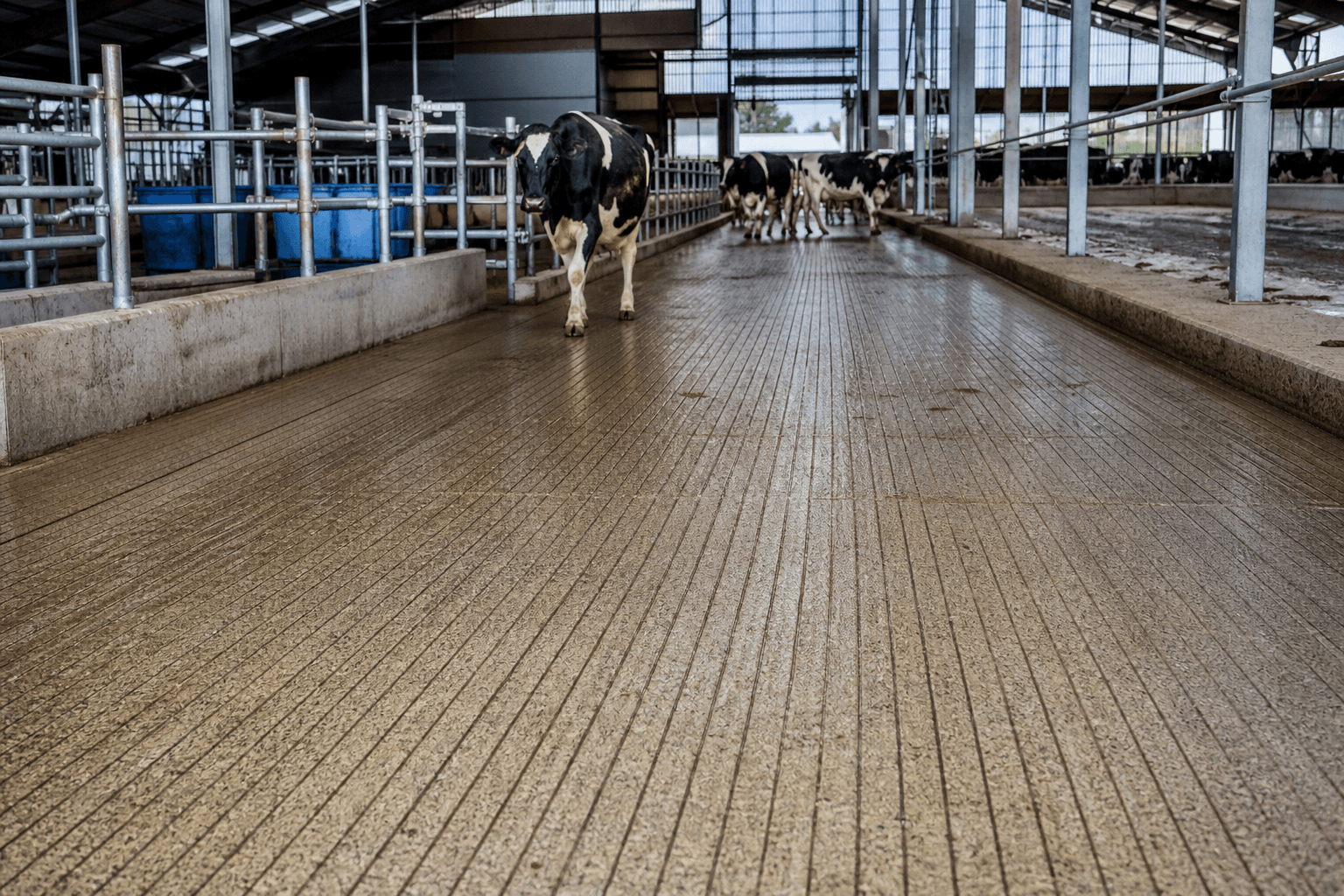
Dairy cows walking confidently on a freshly grooved barn alley with sharp square-edged traction grooves
Smooth concrete looks fine until a cow goes down. Traction belongs on the same priority list as feed quality and milking routine — because slips are one of the most preventable triggers of lameness on a dairy.
Traction Is Infrastructure, Not a Nice-to-Have
Most herd managers I talk to can tell you their somatic cell count, their pregnancy rate, and what they're paying for feed this month. Fewer can tell you the last time someone walked their barn alleys looking for slick spots. That's not a criticism — dairies run tight, and floor traction doesn't show up on a daily report until something goes wrong. But smooth concrete is a slow leak. Every slip that doesn't make the injury log still costs you something in hoof wear, joint stress, and cows that start favoring a leg without anyone noticing for two weeks.
Lameness ranks as the #3 cost on a dairy farm, right behind feed and labor. Industry research puts the daily hit at about $4.50 per lame cow — and that's before you count the 700–900 lbs of milk lost over a typical case. Individual treatment runs $76–$533 depending on severity. Those numbers aren't abstract. They're payroll, cull decisions, and tank averages on farms just like yours. Barn floor traction is one of the few lameness triggers you can address once and protect against for years.
If you haven't read our overview on why grooving works, start there. The short version: square-edged grooves cut into concrete give hooves something to grip without grinding them down. Done right, it's the proven standard for dairy barns. Done wrong — or not at all — you're betting your herd's feet on friction that disappears the first time the alley gets wet.
Smooth concrete is a slow leak. Every slip costs you something, even when it never hits the injury log.
What Smooth Floors Actually Cost You
A cow doesn't have to go down hard to become a lame cow. I've seen herds where the slip rate looked manageable — a stumble here, a scramble there — but lameness crept from 15% to 25% over a single lactation. The floor didn't change. The grooves just wore smooth, or they were never cut in the high-traffic zones where cows pivot and push.
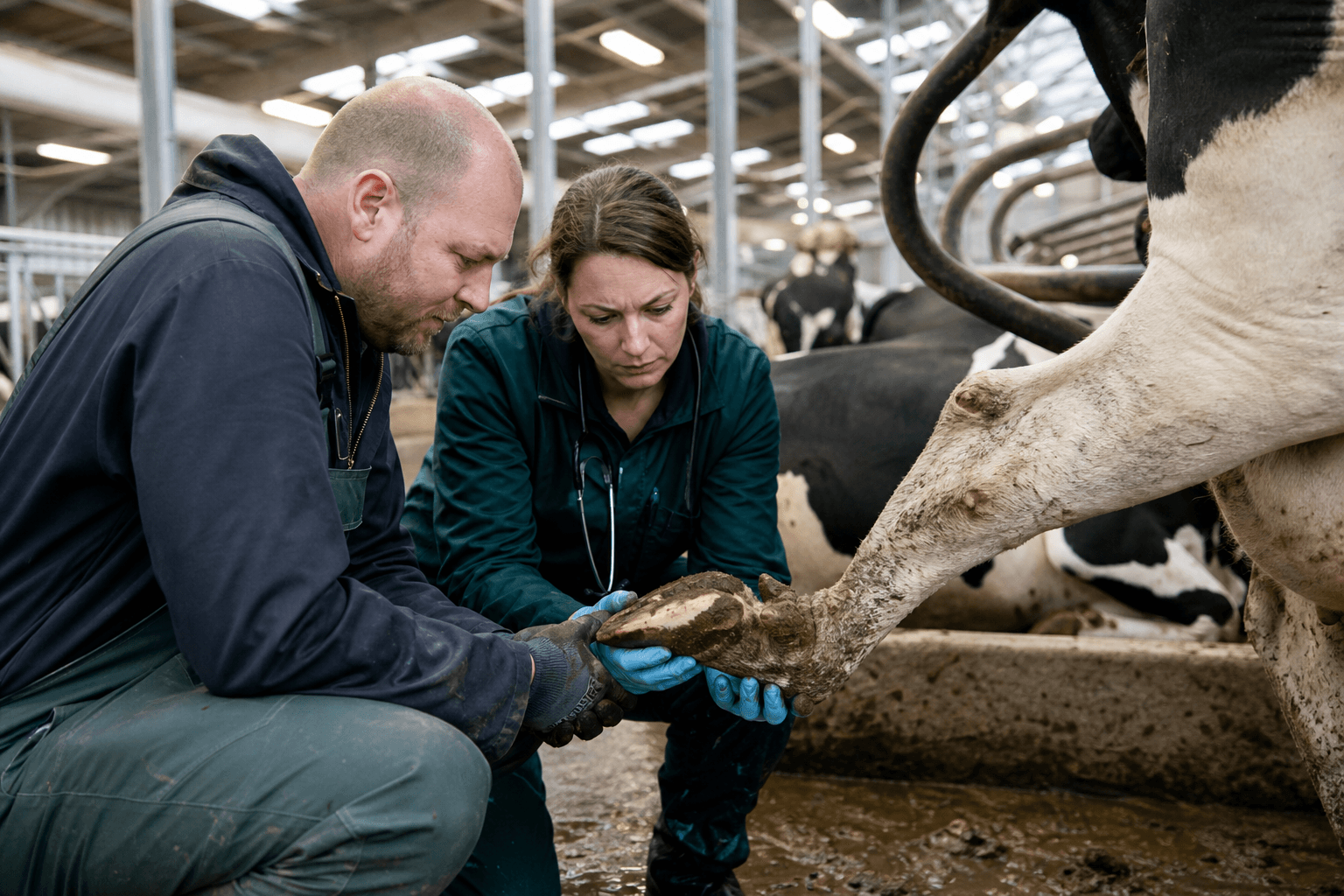
Think about what happens on slick concrete. A cow catches herself mid-slip and loads weight unevenly across her claws. White line disease, sole ulcers, and twisted legs often trace back to footing problems that started months earlier. By the time the hoof trimmer flags her, you're looking at treatment costs in that $76–$533 range per case, plus the milk she won't give you while she's hurting.
Run the math on your own herd. Take your lame cow count, multiply by $4.50 per day, and stretch it across a year. For a 500-cow dairy at a 20% lameness rate, that's 100 lame cows costing you $164,250 annually — and grooving the barn at roughly $0.75/sq ft is a fraction of that. Our free estimate takes ten minutes and gives you real numbers for your square footage.
Where Herd Managers Get Tripped Up
The first mistake is treating traction as a one-time project from twenty years ago. Concrete grooves wear. Manure, sand, and constant cow traffic round off sharp edges over a 6–8 year regroove cycle. A floor that gripped fine in 2018 can be slick as glass by 2025, and nobody notices because the change is gradual — until lameness spikes.
The second mistake is grooving the easy sections and skipping the hard ones. Holding areas, parlor returns, and sharp turns see the most stress. Those are exactly where cows need the most grip. Cutting corners on zone selection saves a few hours of saw time and costs you cows for the next decade.
The third mistake is confusing grooving with milling or other surface treatments. They're not the same thing, and the hoof health outcomes aren't either. Read our comparison on grooving vs milling if a contractor is pushing an alternative. Square-edged grooves at proper spacing — the Dairyland Initiative standard — are what 35+ years of dairy research and field work support.
Putting Traction on the Priority List
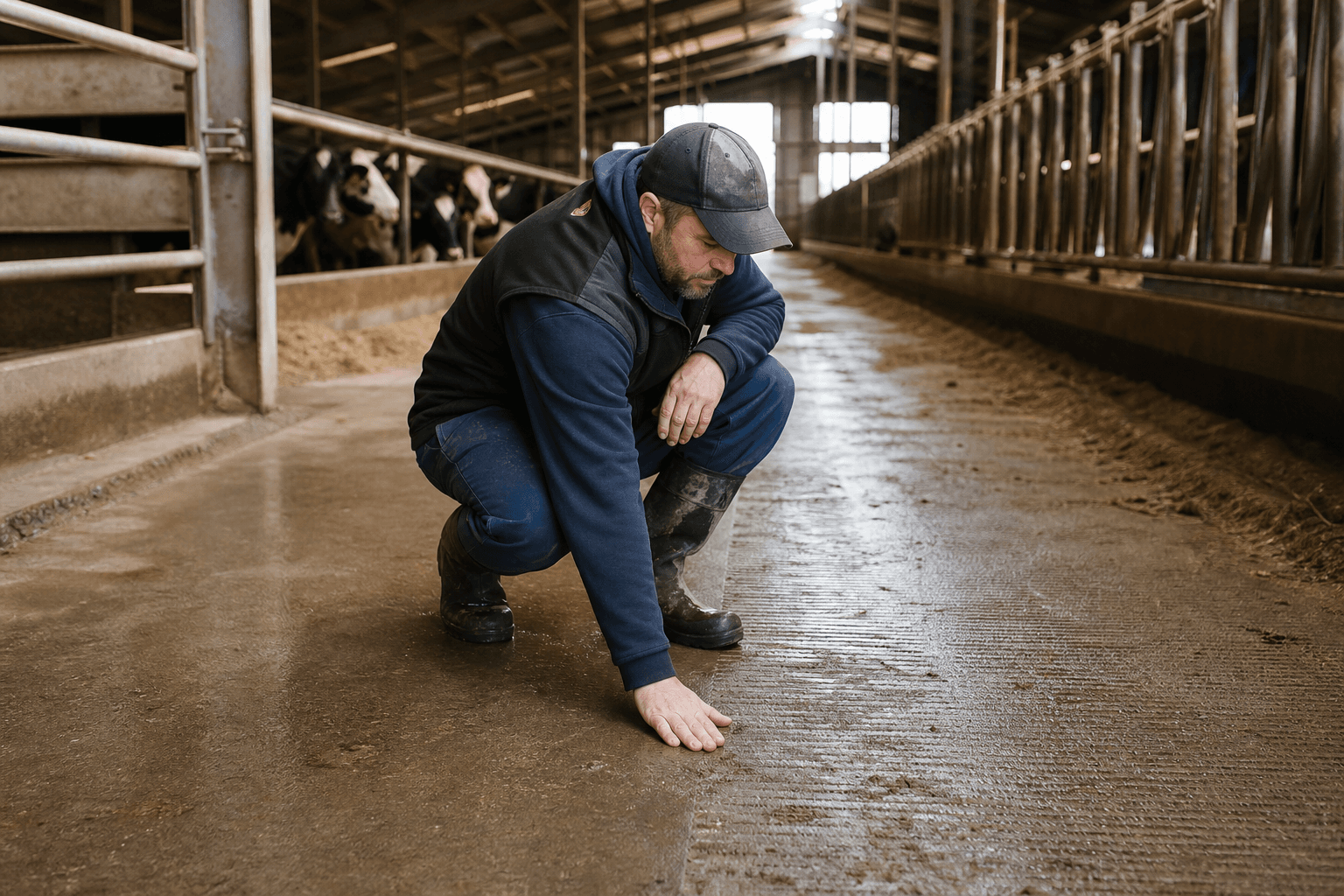
Start with a walk-through. Grab rubber boots and walk every alley, return lane, and holding area at milking time when the floor is wettest. Watch where cows hesitate, scramble, or spread their legs for balance. Those hesitation points are your priority list — not some generic floor plan from the builder.
Schedule grooving before lameness tells you it's overdue. If your barn was last cut six or seven years ago, you're in the window. Don't wait for the vet bill to confirm what your cows already know. Proactive regrooving costs a fraction of reactive hoof work, and the herd keeps flowing without the disruption of pulling lame cows.
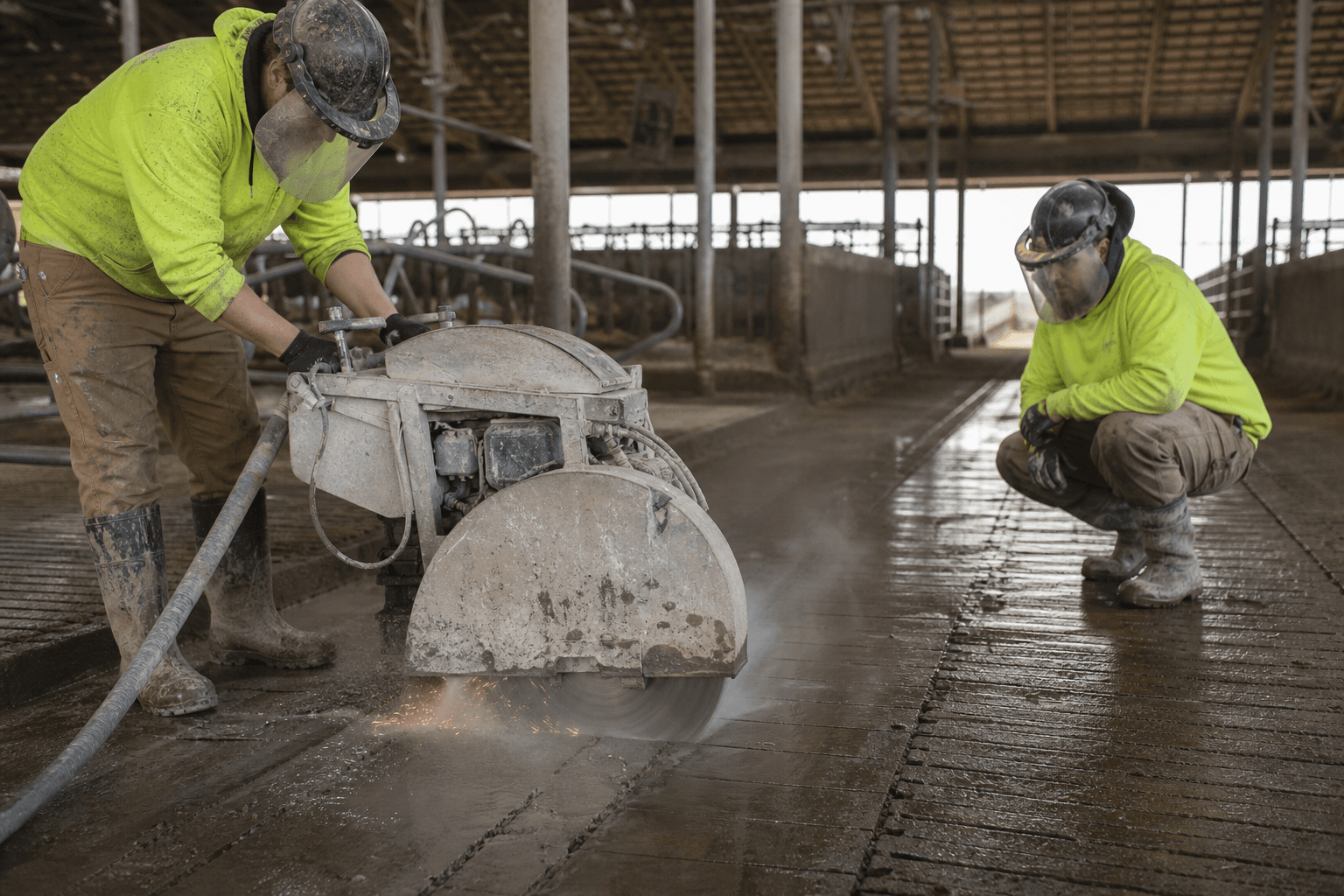
Build traction into your capital plan the same way you plan for TMR mixers and parlor upgrades. At about $0.75/sq ft, grooving is one of the highest-return investments on a dairy floor. Our crew at Davidson Cement Grooving has been at this for 35+ years — we show up, cut square edges, and charge a fair price. No salesman markup. See our full list of grooving services for alleys, free stalls, parlors, and regrooving.
What Good Traction Looks Like in Practice
On a well-grooved floor, cows walk with their heads up and their stride even. You won't see the frantic paddling that slick concrete causes in return lanes. Cows lie down and get up in free stalls without the slow, cautious rise that means she's protecting a sore foot. The whole barn moves faster at shift changes because nobody's bottlenecking at the slick corner.
Hoof trimmers notice the difference too. Farms with maintained grooves tend to see cleaner sole conditions and fewer emergency calls between scheduled visits. That's not magic — it's physics. When hooves grip instead of slide, they wear naturally instead of compensating for bad footing.
We say it on every job: Keep your herd on all fours. That's not a slogan — it's the goal. Traction is how you get there. Different barn layouts call for different approaches; our grooving patterns page shows straight-line, diamond, and herringbone options for alleys, ramps, and turn areas.
The Bottom Line for Herd Managers
You wouldn't run a dairy with a leaking roof and call it fine because the cows are still milking. Smooth barn floors are the same kind of problem — invisible until they're expensive. Traction belongs on your priority list because it prevents lameness before it starts, protects milk production, and costs less than one bad month of lame cows.
If your barn hasn't been evaluated in a few years, January is a good time to fix that. Winter brings wet floors and more indoor time. Spring planning starts now. Get eyes on your concrete, get numbers on your square footage, and make the call before slip season hits hardest.
We've grooved barns in Michigan, Ohio, Indiana, and nationwide for larger operations. Same crew, same standards, same fair pricing. Request a free estimate and we'll tell you straight what your barn needs — and what it doesn't.
Questions Worth Asking Before You Wait
Ask your hoof trimmer how many cases this year started as a slip nobody saw. Ask your milker where cows balk during shift change. Ask yourself when the floor was last evaluated for edge sharpness — not when it was poured, when it was last cut or regrooved. Honest answers tell you whether traction belongs at the top of this month's list or next year's.
Ask any contractor quoting your barn whether they cut square edges to Dairyland Initiative spacing or whether they're selling milling as grooving. The answer separates crews that protect hooves from crews that protect margins. We welcome those conversations because 35+ years in this trade means we've seen what bad work costs farms.
Traction is infrastructure. Treat it that way and your herd stays on all fours — healthier, moving better, and costing you less in the hidden tax of lameness. That's the priority list worth keeping.
Frequently Asked Questions
How often should barn floors be regrooved?
Most dairy barns need regrooving every 6–8 years. Manure, sand, and cow traffic wear groove edges smooth over time. If you notice cows hesitating or lameness creeping up, don't wait for the full cycle — schedule an evaluation.
What does grooving typically cost per square foot?
Fair grooving runs roughly $0.75/sq ft for a professional crew cutting square-edged grooves at proper spacing. Exact pricing depends on barn size, pattern, and travel distance. We provide free estimates based on your actual square footage.
Is grooving really more effective than milling?
For dairy barns, yes. Square-edged grooving at Dairyland Initiative spacing is the research-backed standard. Milling creates a different surface profile with different wear and hoof abrasion characteristics. See our grooving vs milling comparison for details.