Importance
Grooving vs. Milling: An Honest Comparison for Dairy Barn Floors
By Rick Jr. · January 13, 2026
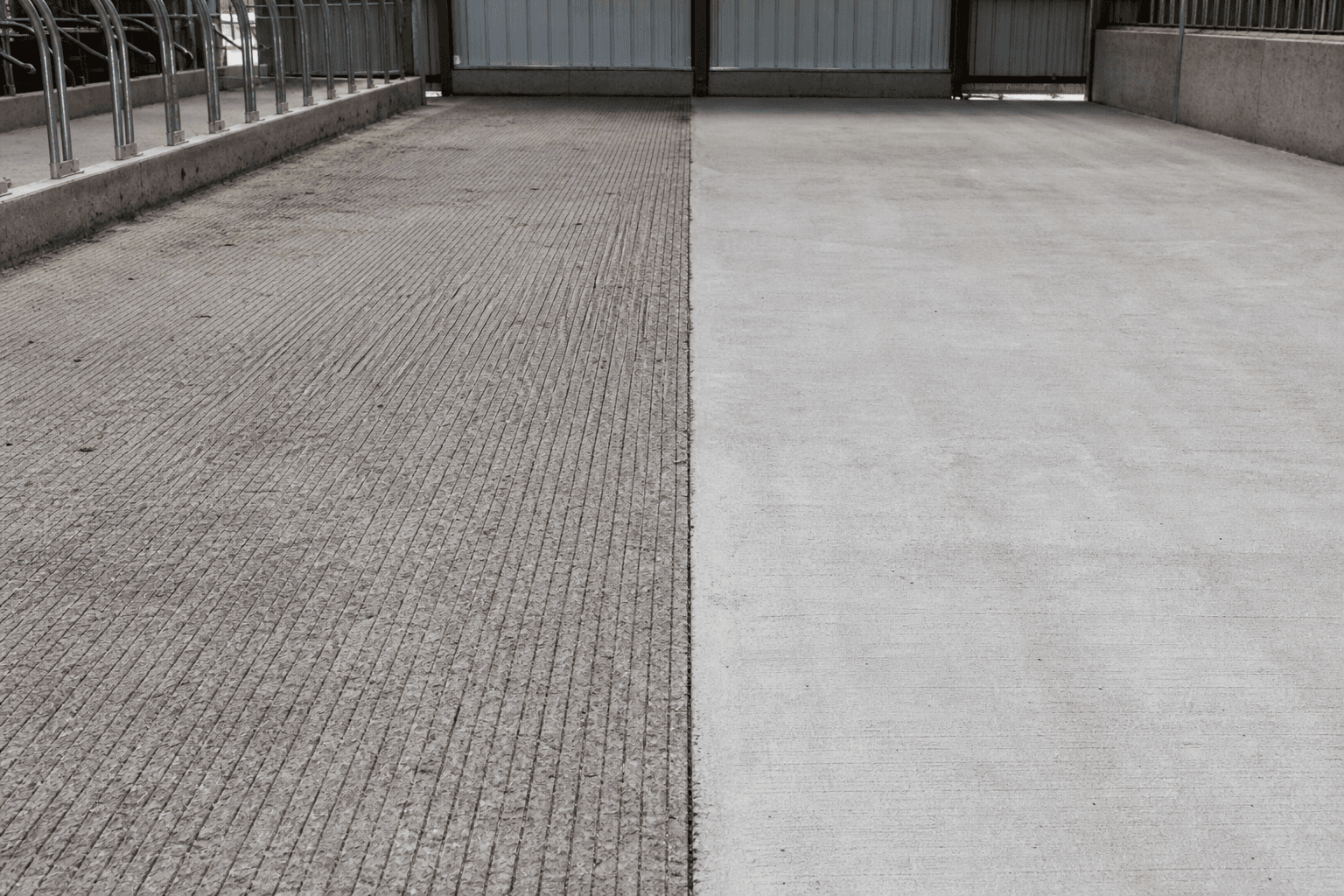
Comparison of square-edged concrete grooving versus floor milling for dairy barn traction
Milling and grooving both roughen concrete — but the traction, hoof safety, and long-term costs are very different. Here's what dairy managers need to know.
Two Treatments, Very Different Outcomes
When barn floors get slick, managers look for solutions. The two most common are grooving and milling — and they're often talked about interchangeably, which is a mistake. Grooving cuts square-edged channels into concrete at precise spacing. Milling abrades the surface to create texture. Both roughen the floor. The similarity ends there. Grooving is the proven dairy industry standard backed by the Dairyland Initiative and decades of research. Milling is a surface treatment with different traction characteristics, wear patterns, and hoof safety profiles.
We get asked about milling on almost every walk-through. Our answer is always the same: understand what each treatment does, then choose based on your barn's needs — not a contractor's sales pitch. We've put together a detailed breakdown on our grooving vs. milling page, and this article walks through the key differences so you can make an informed call for your herd.
Grooving gives cows edges to grip. Milling gives cows texture to scrape against. Those are not the same thing.
How Grooving Works — and Why It Lasts
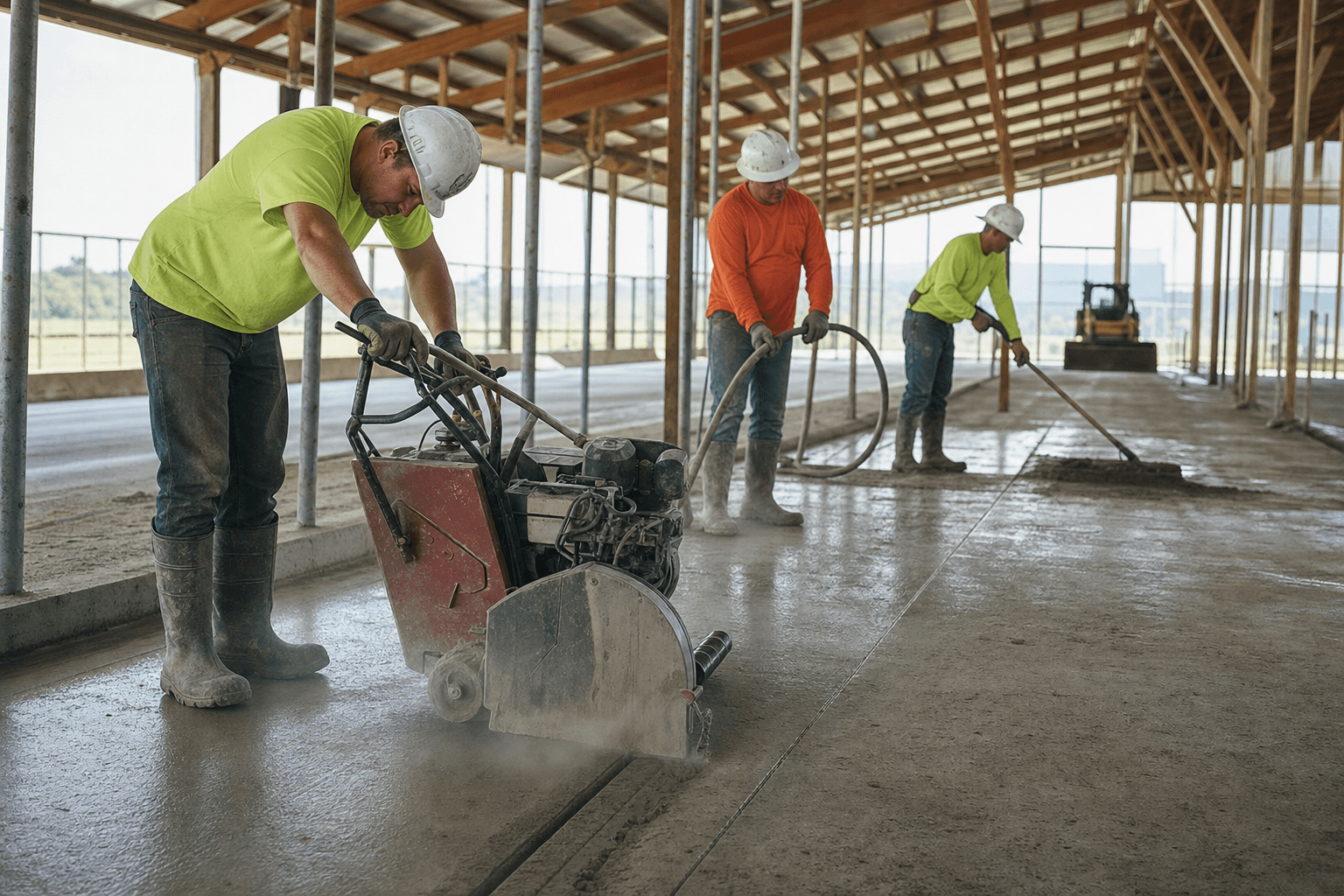
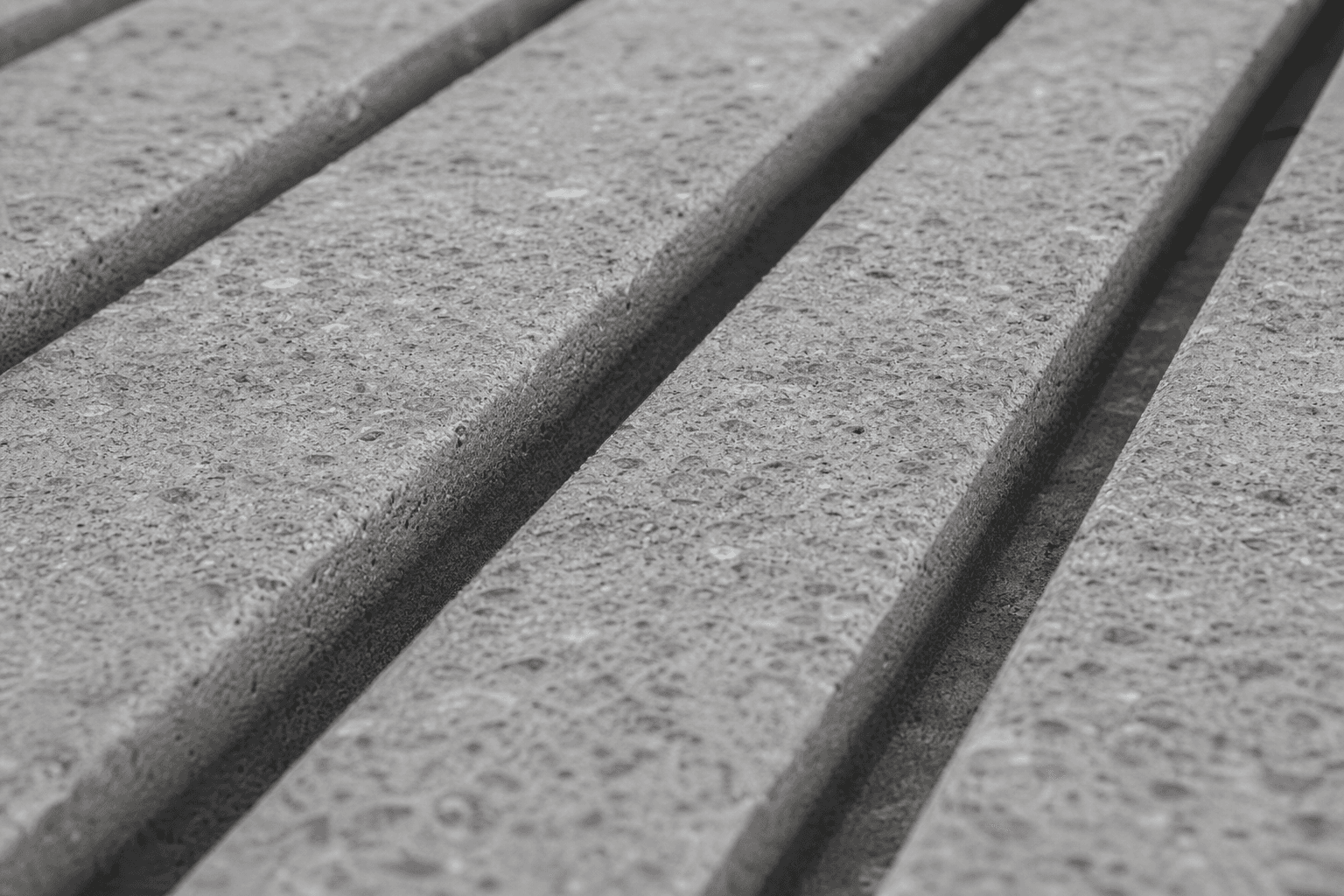
Grooving cuts parallel or patterned channels into concrete using diamond-blade saws. The edges of those channels are square — not rounded — and that's what gives hooves purchase. A cow's hoof fits into the groove channel, the edge stops the slide, and she moves forward with confidence. Proper spacing ensures there's always an edge within reach, regardless of hoof size or stride length.
Square-edged grooves last 6–8 years before regrooving. Wear is gradual — edges round slowly under cow traffic, and traction declines predictably. Regrooving restores the edges at roughly $0.75/sq ft without replacing the floor. Our crew has been cutting grooves for 35+ years, and the regroove cycle is well understood. You plan for it, budget for it, and your cows stay on their feet throughout.
Grooving works in every barn zone — alleys, free stalls, holding areas, parlors, turns, and ramps. Different patterns suit different zones, which you can explore on our patterns page. The versatility and predictability are why grooving remains the standard recommendation for dairy concrete.
How Milling Works — and Where It Falls Short
Milling uses abrasive tools to rough up the concrete surface. The result is a textured finish that increases friction initially. That initial grip can feel impressive right after treatment — but it degrades unevenly. High-traffic areas wear smooth faster than low-traffic zones, creating a patchwork of traction that changes month to month. Predicting when milling needs retreatment is harder than the 6–8 year regroove cycle for grooves.
The hoof safety question matters too. Aggressive milling can create a surface that's too abrasive — causing excessive hoof wear, especially on softer hooves or in herds with existing foot problems. Grooving gives grip through edge contact, not surface scraping. The hoof sits in the channel rather than grinding against it. That distinction shows up in trimmer reports over time.
Milling also can't provide directional traction. A milled surface grips equally in all directions, which sounds good until you realize cows need directional guidance in alleys and multi-directional grip in turn areas. Grooving's pattern options — straight lines, tractor herringbone, diamond — address these needs directly. Milling treats every zone the same.
On a working dairy, "grips equally in all directions" often means cows pivoting on a surface that grabs at the wrong angle — increasing torque on the lateral claw during turns. Grooving's zone-specific patterns exist because cow movement isn't equal in all directions. Barn traffic has lanes, pivots, and push-off points that a uniform texture can't address.
Cost Comparison: Look Beyond Per Square Foot
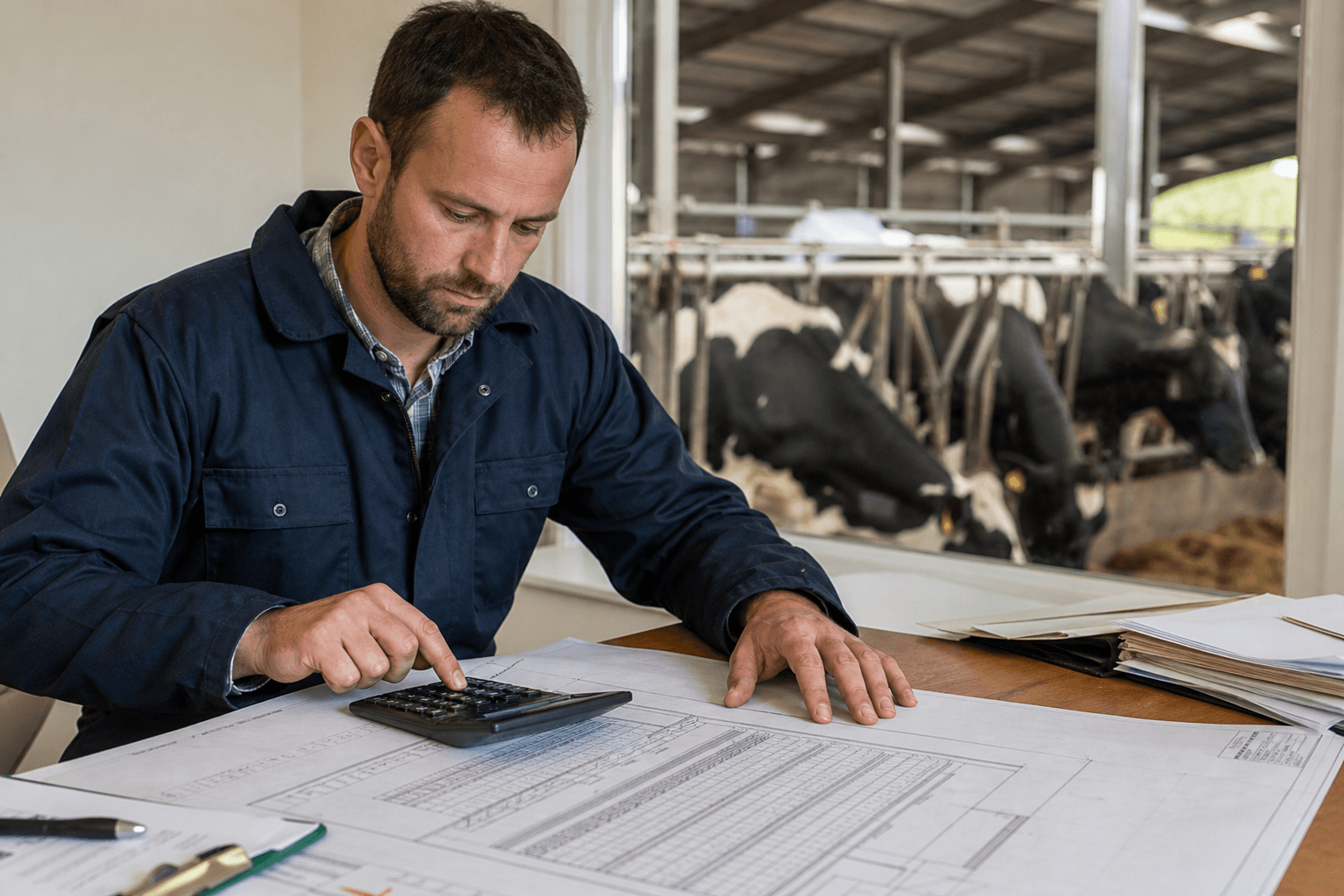
Milling contractors often quote per square foot rates that look comparable to grooving — sometimes higher. But the comparison shouldn't stop at the initial price. Factor in retreatment frequency, lameness costs during traction gaps, and hoof care increases from abrasive surfaces. A milling job that needs retreatment every 3–4 years at a similar per-foot cost can exceed grooving's 6–8 year cycle in lifetime expense.
Grooving at roughly $0.75/sq ft from our crew is fair, flat pricing with no salesman markup. Milling quotes from traveling contractors vary widely — we've heard from farms quoted nearly double what we charge for grooving on the same floor plan. Always compare total cost of ownership, not just the day-one quote. Request a free grooving estimate and you'll have a real number to compare against any milling bid.
Remember the lameness math: $4.50/day per affected cow, 700–900 lbs of lost milk, $76–$533 per treatment case. Lameness is the #3 cost on a dairy farm. Whatever treatment you choose, the cost of getting it wrong shows up in your hoof trimmer's invoice long before it shows up in your flooring budget.
What the Research and Field Data Say
The Dairyland Initiative recommends grooving — specifically square-edged grooves at appropriate spacing — as the standard for dairy barn concrete traction. University extension publications across dairy states echo this recommendation. The research is consistent: grooved floors reduce slip incidents, improve cow confidence and movement, and support lower lameness rates compared to smooth or improperly treated surfaces.
Milling research is less extensive in dairy-specific applications. Some milling treatments show short-term traction improvement, but long-term data on hoof safety, retreatment timing, and lameness impact is thinner. That doesn't mean milling never has a place — but it means grooving is the default recommendation for a reason. When a contractor pushes milling as a grooving replacement, ask for dairy-specific long-term data, not just a demo of initial surface texture.
Our recommendation: groove your barn. If you're evaluating a specific zone where milling has been suggested — outdoor yards, for example — evaluate it on its own merits against grooving for that zone. Don't let a one-size-fits-all sales pitch override what 35+ years of barn work has taught us. Read more about why grooving works and what makes it the industry standard.
Hoof trimmers can often tell you whether a floor is grooved or milled without looking — grooved herds show different wear patterns than milled herds over the same interval. Ask yours what they're seeing on your cows' feet before you choose a surface treatment.
Making the Right Call for Your Barn
The decision comes down to three questions: How long will the treatment last before retreatment? What happens to hooves over that lifespan? And what's the total cost including lameness during any traction gaps? Grooving wins on all three for standard dairy barn applications — alleys, stalls, holding, parlor, turns, and ramps.
If you've received a milling quote and want a straight comparison, send us your floor plan or invite us for a walk-through. We'll quote grooving on the same zones and let you compare apples to apples. No pressure, no markup games — just fair numbers from a crew that's been keeping herds on all fours since 1980. See our full service list and learn about our crew on the about page.
Ask any milling contractor how many dairy barns they've regrooved on a predictable cycle — the question usually ends the conversation. Grooving's 6–8 year maintenance window is documented, budgetable, and repeatable. That's what a long-term flooring strategy looks like on a working dairy, not a surface treatment that might need redoing before the next lactation ends.
University extension guides across dairy states still point to square-edged grooving as the baseline recommendation — not because it's traditional, but because the field data and hoof-health outcomes consistently support it over alternatives that promise quick texture fixes without long-term planning.
When traction fails, cows don't wait for your budget cycle — they slip, they lame, and the meter starts at $4.50 per day.
Frequently Asked Questions
Can milling and grooving be used together?
They can, but it's rarely necessary. Grooving handles traction needs in all standard barn zones. If a contractor suggests both, ask why grooving alone isn't sufficient for that zone. Usually the answer reveals a sales incentive, not a barn need.
Does milling last as long as grooving?
Generally no. Milled surfaces degrade unevenly and often need retreatment sooner than the 6–8 year regroove cycle for square-edged grooves. Predictability of wear is one of grooving's biggest advantages.
Which treatment does the Dairyland Initiative recommend?
Grooving — specifically square-edged grooves at research-backed spacing. The Dairyland Initiative identifies proper floor traction as a core requirement for healthy dairy housing, and grooving is the standard method for achieving it on concrete.