Benefits
Pattern Guide: Straight Lines, Tractor Herringbone, and Diamond for Every Barn Zone
By Rick Jr. · October 14, 2025
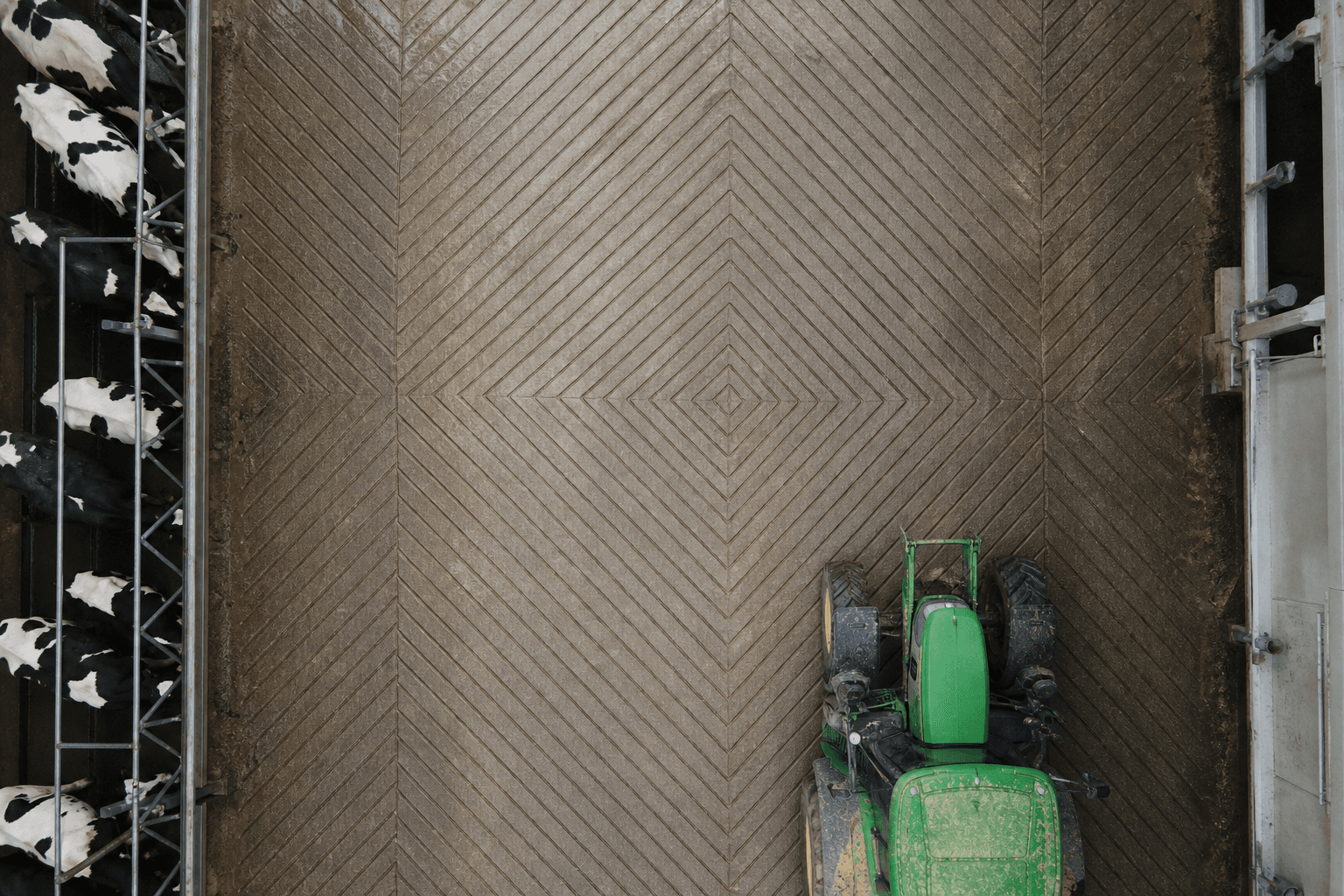
Straight line, tractor herringbone, and diamond grooving patterns on dairy barn concrete floors
Not every barn zone needs the same groove pattern. Straight lines for alleys, tractor herringbone for free stalls, and diamond for turns — here's how to match the pattern to the traffic.
Why Pattern Choice Matters More Than You Think
Most barn floors get one pattern applied everywhere — and that's where traction problems start. A groove pattern that works in a straight alley can fight cow movement in a free stall or turn lane. The grooving patterns we cut at Davidson are chosen zone by zone, based on how cows actually travel through your barn. Square-edged grooves at research-backed spacing give hooves something to grip without creating abrasion problems. The why behind grooving is simple: cows that trust the floor move confidently. Cows that don't trust it bunch, hesitate, and slip — and every slip is a step toward lameness that costs you $4.50 a day per affected cow.
The Dairyland Initiative and university research both point to the same conclusion: traction is zone-specific. Alleys need directional grooves that guide flow. Free stalls need patterns that support standing, lying down, and getting up without hoof twist. Turn areas need multi-directional grip. When you match the pattern to the zone, you get better herd flow, fewer injuries, and grooves that last the full 6–8 year cycle before regrooving. That's not marketing — that's what we've seen across 35+ years of barn floors nationwide.
The right pattern in the wrong zone is almost as bad as no grooving at all.
Straight Lines: The Alley Workhorse
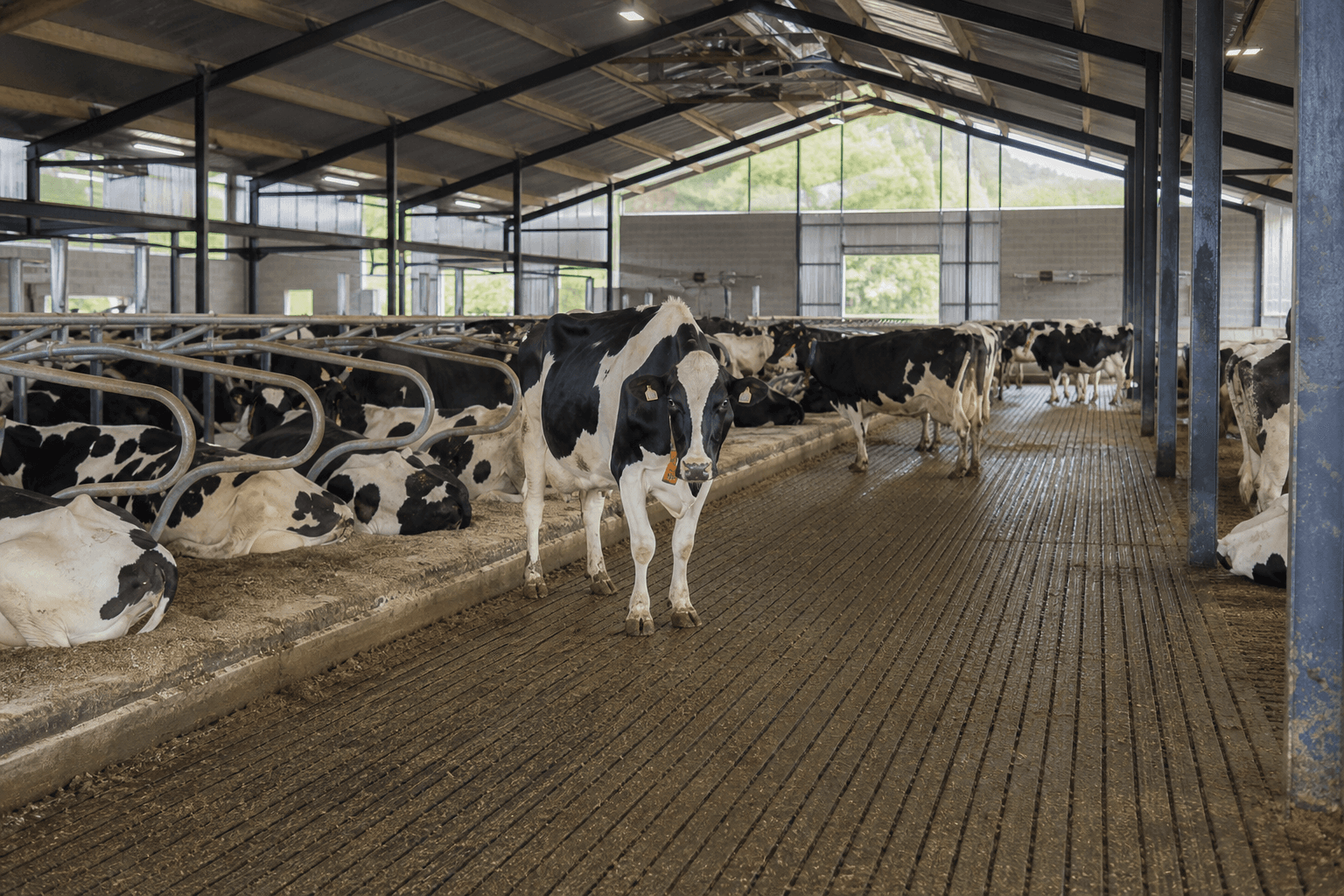
Straight-line grooving is the backbone of most dairy barn alleys. Cows walk in one direction — to the parlor, back to stalls, around the loop — and parallel grooves give them consistent footing along the entire path. We cut square-edged straight lines at spacing that matches alley width and cow traffic volume. Wider alleys with heavy push-up traffic may need slightly tighter spacing; narrower return lanes can run slightly wider. The goal is always the same: a cow should never feel the floor slide underneath her mid-stride.
Alley grooving is usually the highest-ROI zone in the barn because it handles the most footfalls per day. If you're phasing a grooving project, start here. Cows spend more time walking alleys than anywhere else, and smooth alley concrete is where most slip incidents begin. Our alley grooving service covers everything from feed lanes to return alleys. When you're ready to plan, request a free estimate and we'll walk your alleys with you to confirm spacing and coverage.
One mistake we see often: grooves cut too shallow or with rounded edges from worn blades. Square edges are non-negotiable — they're what give hooves purchase. Rounded grooves look grooved but behave like smooth concrete within a season or two. That's why regrooving on a 6–8 year schedule matters, and why the quality of the initial cut sets you up for decades of reliable traction.
Tractor Herringbone: Built for Free Stalls
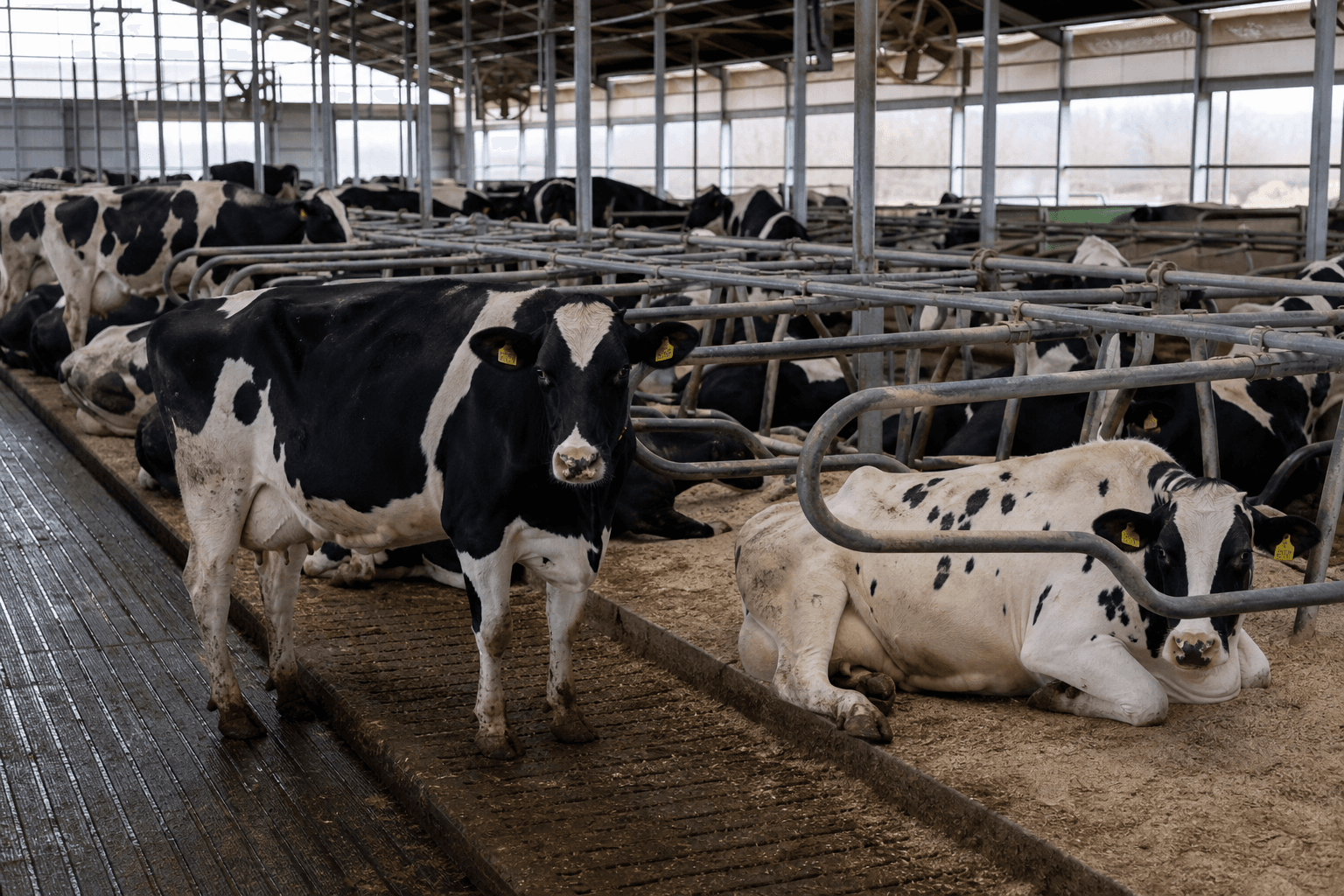
Free stalls are a different animal than alleys. Cows don't just walk through — they pivot, back out, stand, lie down, and push off to rise. A single-direction groove pattern can actually work against them in a stall, creating sideways slip when a cow shifts weight getting up. Tractor herringbone puts grooves at opposing angles so hooves always find an edge to grip, regardless of which direction the cow is facing or moving.
This pattern is especially valuable in older barns where free-stall dimensions are tight. When a 1,500-pound Holstein has to scramble to stand on smooth concrete, the torque on her rear legs is real — and that's how injuries that cost $76–$533 per case start. Proper free-stall grooving reduces that scramble. Cows rise smoothly, lie down without sliding, and spend less time shifting weight trying to feel secure. Herd managers who've made the switch often tell us the difference shows up in stall time and resting behavior within weeks.
We pair tractor herringbone in stalls with straight lines in connecting alleys so cows transition from one zone to the next without a traction cliff. That zone-to-zone planning is part of every job we quote. Browse our full services list to see how free-stall grooving fits alongside alley and parlor work.
Diamond Pattern: Grip Where Cows Pivot
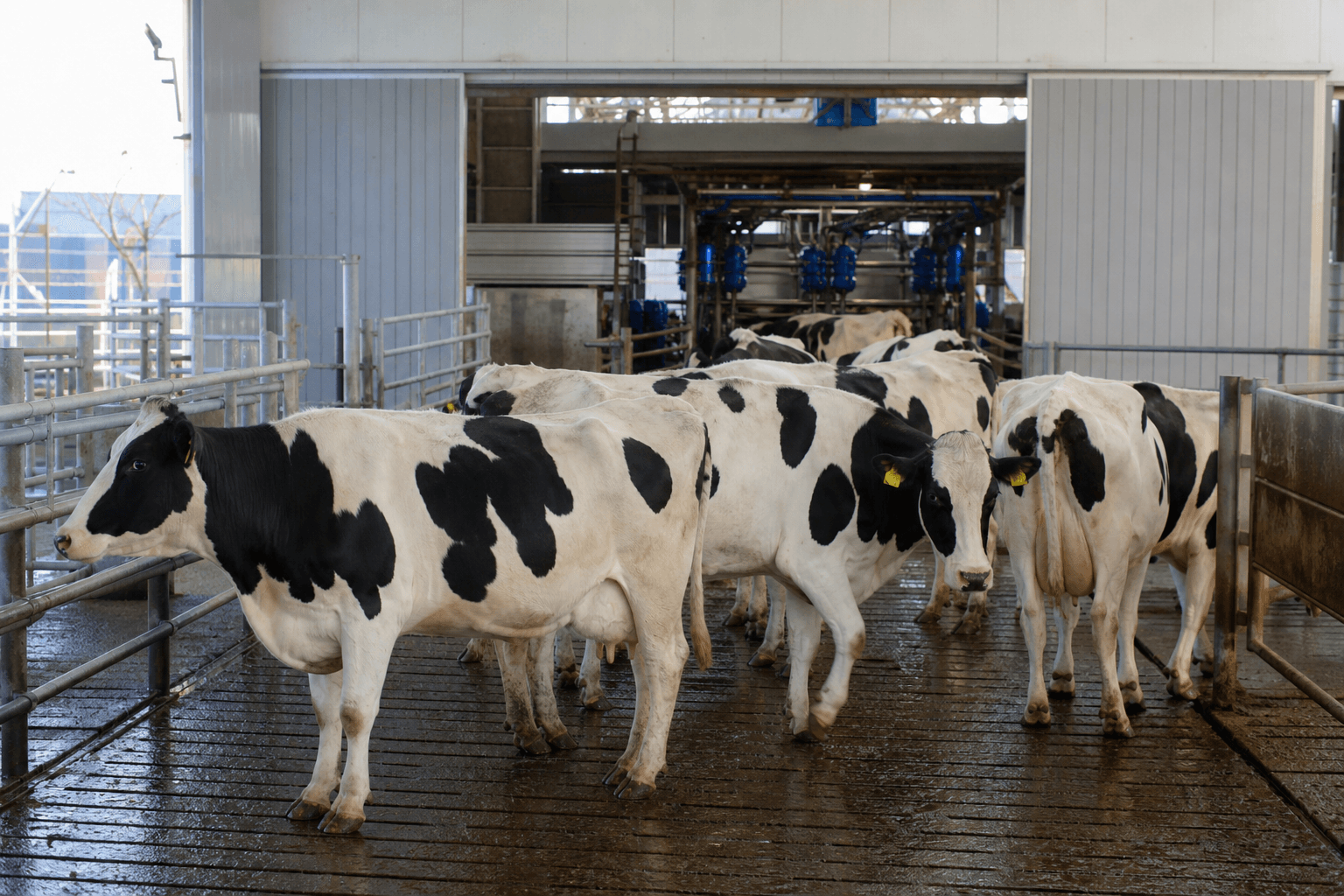
Turn areas — parlor entries, crossovers, herringbone returns, and any corner where a cow changes direction — see the highest torque loads on hooves in the entire barn. Straight grooves help cows going one way; they do less for a cow pivoting 90 degrees. Diamond pattern grooving cuts grooves in a crosshatch so there's always an edge available at any angle of travel.
This is the pattern we recommend anywhere cows regularly turn under load. Holding area entries, parlor return lanes, and crossover points between barn sections are the usual suspects. Without diamond grooving in these zones, you can have perfectly grooved alleys and still lose cows to slips at the turns. It's one of the most common gaps we find when we walk a barn for the first time.
Diamond adds cost per square foot because the cutting is more intensive, but the coverage area is usually small relative to total barn square footage. At roughly $0.75/sq ft, treating turn zones is a fraction of what one lameness case runs you. If you're comparing options, read our grooving vs. milling comparison — milling can't replicate the directional control that diamond grooving gives you at pivot points.
Planning Your Barn Zone by Zone
The best grooving plans start with a walk-through, not a square-foot quote. We map your barn into zones — alleys, stalls, holding, parlor, turns, ramps — and assign a pattern to each based on traffic and cow behavior. Most full-barn jobs end up using two or three patterns across different zones, not one pattern everywhere. That approach costs no more per square foot; it just requires someone who knows barns, not just concrete.
Phasing is always an option. Many farms start with alleys and holding areas, then add free stalls and turn zones the following season. Because grooves last 6–8 years before regrooving, getting the highest-traffic zones done first captures most of the lameness prevention benefit early. We'll help you sequence the work so you're not paying twice to move equipment.
Ready to match patterns to your barn? Request a free estimate and we'll come walk the floor with you. No salesman markup, no pattern upsells you don't need — just square-edged grooves cut right, zone by zone. That's how we've kept herds on all fours for more than 35 years.
What Good Grooving Looks Like Five Years Later
A pattern guide only matters if the grooves hold up. Square-edged grooves cut at proper depth and spacing wear gradually over 6–8 years — edges round slowly, and regrooving restores them without replacing the floor. That's the maintenance cycle the Dairyland Initiative recommends, and it's what we plan for on every job. Grooves that disappear in two years were either cut wrong or cut in the wrong place.
When you walk a well-grooved barn five years after the cut, you should still see defined edges and feel grip underfoot. Cows should move through alleys without hesitation and rise in stalls without scramble. If your floors are smooth again and lameness is climbing, you're overdue for regrooving — not replacement. Learn more about our approach on the about page, or explore why grooving works when it's done by a crew that treats every barn like their own herd depends on it — because somewhere, one does.
Bring photos or video of problem zones to your walk-through if you can — a clip of cows hesitating at a turn or scrambling in a stall tells us more than a square-foot estimate ever could. We match what we see in your footage to the pattern that fixes it, not the pattern that's easiest to sell.
Frequently Asked Questions
Can I use one groove pattern for my entire barn?
You can, but you shouldn't. Straight lines work in alleys but fight cow movement in free stalls and turn areas. Matching the pattern to each zone — straight lines for alleys, tractor herringbone for stalls, diamond for turns — gives better traction and fewer injuries across the whole barn.
How do I know which zones need diamond pattern grooving?
Anywhere cows pivot under load: parlor entries, return lanes, crossovers, and tight corners. If you've seen slips or hesitation at a turn despite grooved alleys, that zone likely needs diamond pattern. We identify these spots during every walk-through before quoting.
How long do groove patterns last before regrooving?
Square-edged grooves typically last 6–8 years before edges wear enough to reduce traction. Regrooving restores the edges at a fraction of floor replacement cost. We recommend planning regrooving before lameness numbers climb, not after.